
Laser Scan to BIM vs Traditional Surveys: Which is Best for Construction Projects?
- February 26, 2026
- Posted by: admin
- Category: CAD
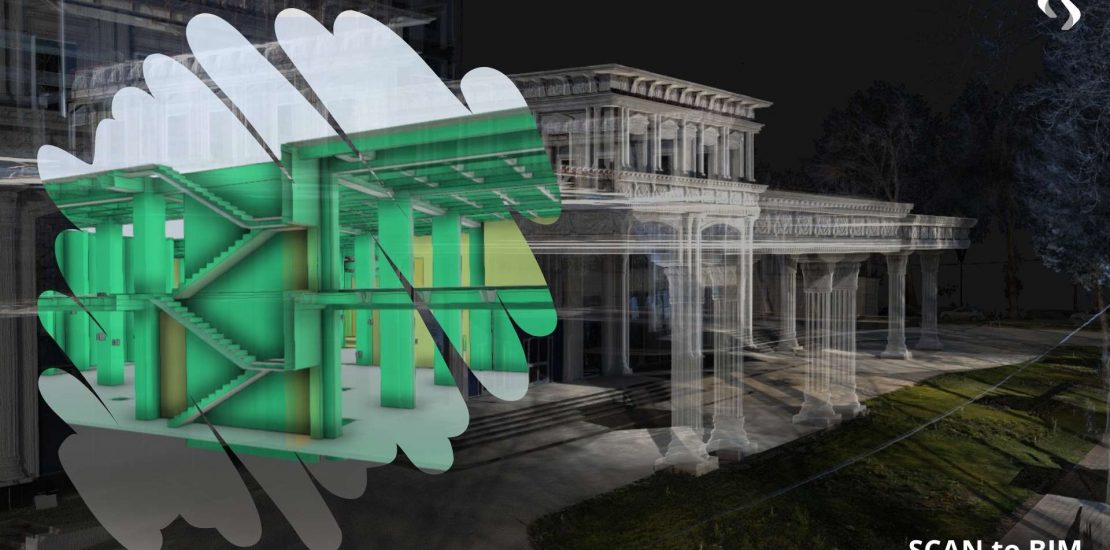
Surveys are essential to every successful construction project, from initial feasibility through to ongoing maintenance. Accurate existing-condition data influences design decisions, cost plans and construction sequencing, so any missing or incorrect information can quickly snowball into costly delays and rework. As technology has evolved, project teams now have a choice between traditional surveying methods and more advanced laser scan to BIM services, which turn real-world spaces into accurate 3D models that can be shared across the whole project team.
From Laser Scans to Usable BIMs
Building Information Modelling (BIM) is the process of creating a digital twin of a building, and using laser scanning can improve how you capture and use existing-condition data. On-site, laser scanners capture millions of points across every visible surface, creating a detailed point cloud that reflects reality with millimetric precision.
This point cloud is then converted into a BIM model through a specialist scan to BIM service, so walls, slabs, columns, doors, windows and key services are rebuilt as 3D elements instead of lines on a drawing. Since the model is created directly from the scan, it’s essentially a 3D record of the building, meaning you can cut any section, generate plans and elevations, run clash checks and coordinate services with far more confidence than with traditional 2D surveys.
Traditional Surveying Methods
Traditional surveys typically rely on manual measurements, total stations and 2D drawings. A surveyor will visit the site, select key reference points, measure dimensions, and draft plans, sections, and elevations based on those measurements.
For simple, small or low-risk projects, this approach can still work well, especially where budgets are tight and the building structure is straightforward. However, these manual methods have some limitations:
- They only record what the surveyor chooses to measure on the day.
- Complex spaces can be difficult to capture fully.
- Human error, inconsistent referencing and incomplete notes can lead to inaccuracies.
- Refurbishments and hidden services may not be fully understood from 2D drawings.
When projects are more complicated, for example refurbishing existing buildings or working with historic structures, the risk of missed information rises significantly. This is where laser scan to BIM services offer clear advantages.
Speed: How Quickly Do You Get Usable Information?
Speed is often the first big difference project teams notice when comparing laser scan to BIM with traditional surveys.
For traditional methods, surveyors often need several visits to capture all required dimensions, especially if new questions arise during the design process. Each revisit adds time, effort and cost, and can delay decision-making while teams wait for updated drawings.
On the other hand, 3D laser scanning focuses on capturing as much as possible in a single visit. Laser scanners can quickly collect point cloud data across large or complex spaces. Once scanning is complete, the data can be processed to create highly accurate 3D models and 2D drawings without returning to the site each time a new measurement is needed.
For projects with tight timeframes or limited site access, a scan to BIM service provides a more efficient option for reliable information. Designers, engineers and contractors can begin working from the 3D model sooner, reducing the overall pre-construction timeline.
Accuracy: How Reliable is the Information?
Accuracy is another key factor when choosing between survey options. Traditional surveys can be very accurate when executed carefully, but there’s a higher risk of misread measurements, incorrectly recorded dimensions, and assumptions in areas that are difficult to access or see.
Laser scanning significantly reduces these risks. Modern scanners capture measurements with millimetric precision, creating a point cloud that represents the real-world building. When that point cloud is converted into a BIM model, the geometry of walls, floors, ceilings, and structural elements closely matches the actual conditions on site.
This level of accuracy is particularly valuable for:
- Refurbishments, where new works must work precisely with the existing fabric.
- Heritage buildings, where nothing is perfectly straight or level and every detail matters.
- Complex MEP coordination, where there is an increased likelihood of clashes.
A BIM model created using a laser scan offers more reliability and quality assurance than relying solely on traditional, manually measured 2D drawings.
Cost: What is the Upfront Spend vs Project Value?
On paper, a traditional survey can appear cheaper than laser scan to BIM services. The equipment is generally simpler, but the deliverables are often limited to basic drawings. For small, uncomplicated projects, this can be enough and cost-effective. However, when considering total project cost, it’s important to factor in:
- The cost of site re-visits to capture missed information.
- The impact of clashes and errors during construction.
- The rework, delays and disruption to operations.
- The lack of reusable information for future projects or facility management.
While a scan to BIM service may have higher upfront fees, it provides more accurate data that can be used across design, construction and operations. The same BIM model can support everything from 3D visualisation, detailed design and clash detection to compliance evaluations, facility management and asset tracking. When viewed over the building’s total lifespan, laser scan to BIM often delivers better value than a traditional survey.
When is Traditional Surveying the Right Choice?
Traditional methods can still be beneficial in certain scenarios. They can be used when:
- The project is small and low-risk, such as simple single-room renovations.
- The structure is straightforward and well understood.
- The budget is extremely restricted, and the client accepts a higher risk.
- Only a limited set of dimensions is required, and future reuse of data is unlikely.
For example, a basic measured survey for minor internal alterations may be enough to support a successful project. In this case, the simplicity of traditional techniques can be sufficient.
When Should You Choose Laser Scan to BIM?
Laser scanning provides exceptionally precise data, ensuring high-fidelity results for As-Built building condition survey and is generally the better option when:
- You are working on total refurbishments, fit-outs or extensions in existing buildings.
- The structure or services are complex or partially undocumented.
- Multiple disciplines need to coordinate in 3D.
- The project team isn’t local and needs to work from the same digital model.
- You want a reliable as-built model for future maintenance or expansion.
Since scan to BIM produces a detailed digital representation of the building, it supports a wide range of use cases beyond initial design, from virtual walk-throughs and analysis after defects or incidents to scenario testing and environmental simulations. In short, if you’re looking for more than just a one-off drawing, laser scanning provides a future-proof solution.
Making the Right Choice for Your Next Project
Choosing between traditional surveys and laser scan to BIM is ultimately about risk, complexity and long-term value. By investing in a high-quality 3D modelling service using accurate laser scan data, you reduce uncertainty, minimise clashes, and give the entire team a shared, trusted view of reality. This helps keep projects on track, reduces rework and supports better decision-making from concept through to operation.
At Surveyhands Engineering, we provide advanced services that turn real-world buildings and spaces into highly accurate BIM models. Our team has extensive experience, and you can trust that we will capture all essential architectural and structural details to support real project workflows, from design and coordination to cost planning and facilities management. We can also tailor the level of detail and output formats to your requirements, aligning with your project’s scope and budget.
Get in touch with us at Surveyhands Engineering today to learn more about our scan to BIM service. We can help you choose the right survey strategy and deliver the digital information you need to make confident decisions at every stage of your project.